Multigenerational Living in Kalamazoo Is a Growing Lifestyle Choice.
1865 S 8th Street Deserves Thoughtful Consideration
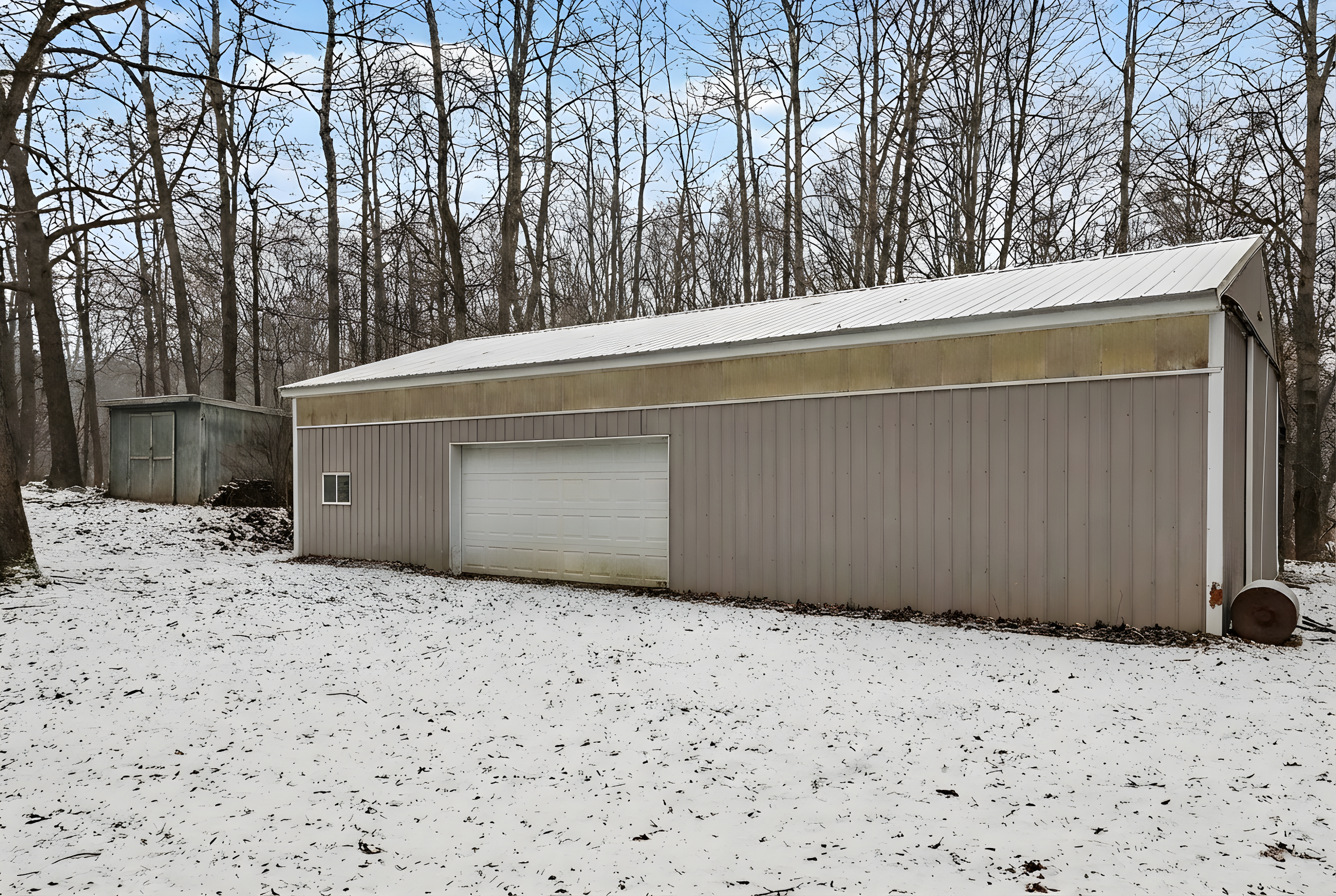
How does a 32X50 pole barn become an opportunity for multigenerational living??
Across Southwest Michigan, individuals and senior are quietly rethinking housing decisions.
Some conversations begin with aging family members or individuals ready to live a more carefree retirement life. Some are thinking of ways to be supportive to others in the their lives
.
Some begin with rising housing costs in Kalamazoo County.
Some begin with grandchildren.
Some rethinking begin with seniors simply asking:
What kind of lifestyle do we/I want next?
Do we want:
Less maintenance?
More flexibility to travel?
Seasonal living in two locations?
Proximity to family?
A plan in place if care becomes necessary?
Or simply more breathing room?
The right answer does not always involve moving. Sometimes the right answer is staying put. Sometimes it’s renovating the home you’re already in. Sometimes it’s downsizing.
And sometimes, it’s aligning two households onto one thoughtfully structured property.
That’s where 1865 S 8th Street, Kalamazoo, MI 49009 enters the conversation.
Located in Oshtemo Township, within the Kalamazoo Public Schools district, this nearly 10-acre wooded property even qualifies for the Kalamazoo Promise.
Let’s explore more about aligning two households and begin to understand the opportunity.
What are the anchor points a property needs to serve interconnected indpendence/multigenerational living well?
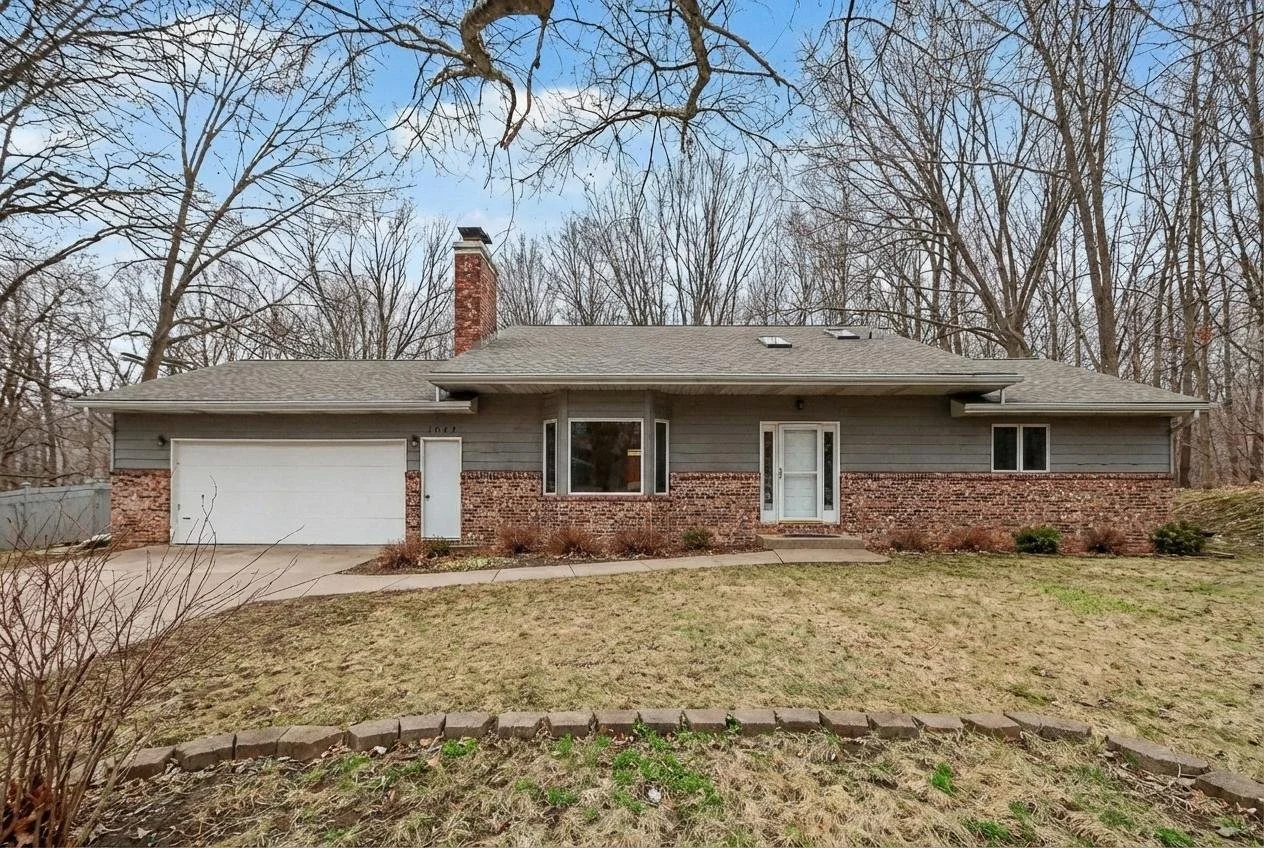
The Main House: A Strong Anchor for Daily Living
For any long-term plan to work, the main home must function exceptionally well on its own — and this one does.
This 4-bedroom, 2.5-bath home offers a layout that supports both everyday living and long-term flexibility. The living room features a vaulted ceiling, bow window, and brick fireplace, creating warmth and natural light. The kitchen includes custom cabinetry, a snack bar, and a dining area that opens to a screened porch and multiple decks, which is a big deal when you want gathering space without everyone being on top of each other.
Two bedrooms are on the main level, including the primary suite with an updated en-suite bath and walk-in closet. Upstairs are two additional bedrooms and a loft overlooking the living space. The walkout lower level provides finished living space and storage and is plumbed for an additional bath, offering future flexibility.
There is also extra space off the back of the garage that is ideal for a shop or storage and includes an overhead door to the backyard — a practical feature that matters a lot on acreage properties.
This home sits privately in the woods while remaining minutes from US-131, I-94, shopping, and restaurants, which is a rare combination in the Greater Kalamazoo area.
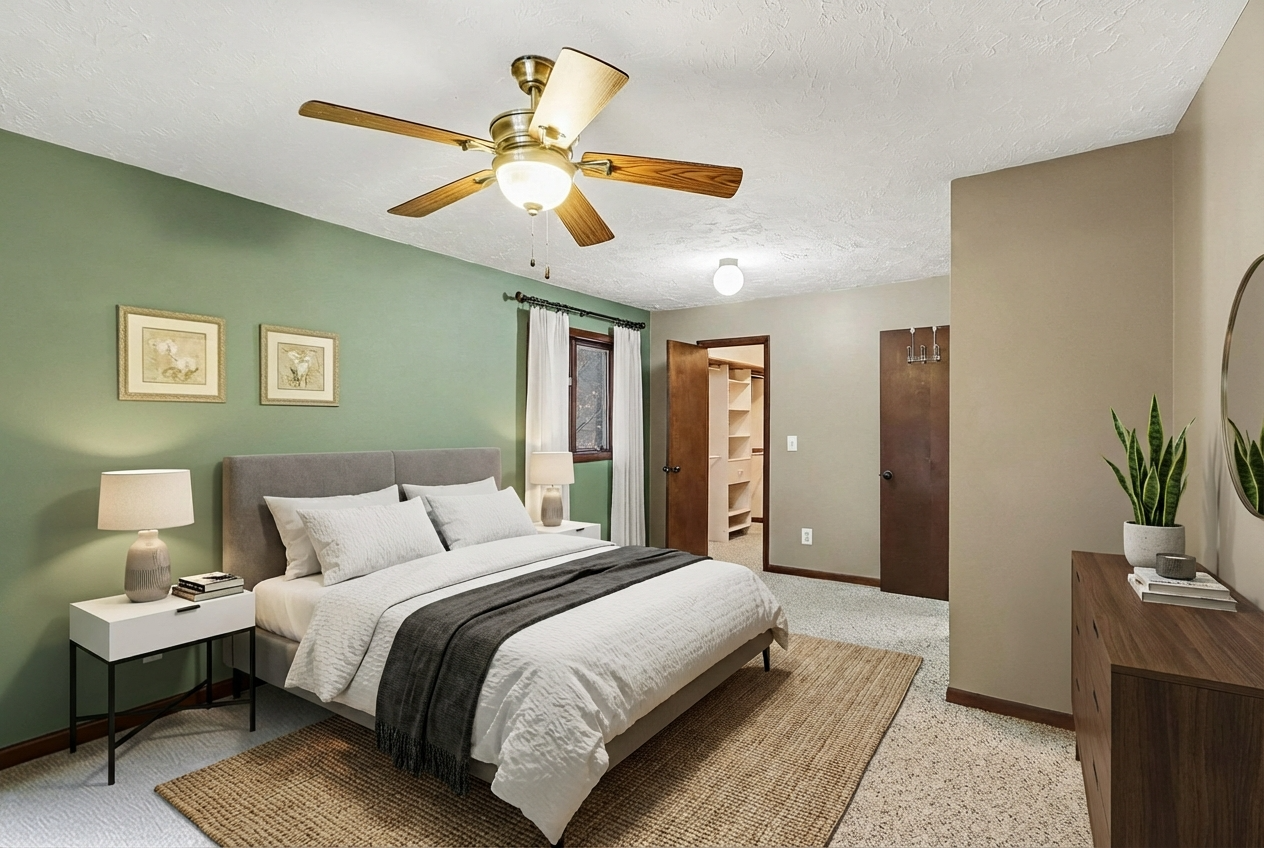
The Barn: The “Second Anchor” of the Property
On properties like this, the barn isn’t a side note — it’s a second anchor and perhaps a key to an accessofy dwelling unit.
.
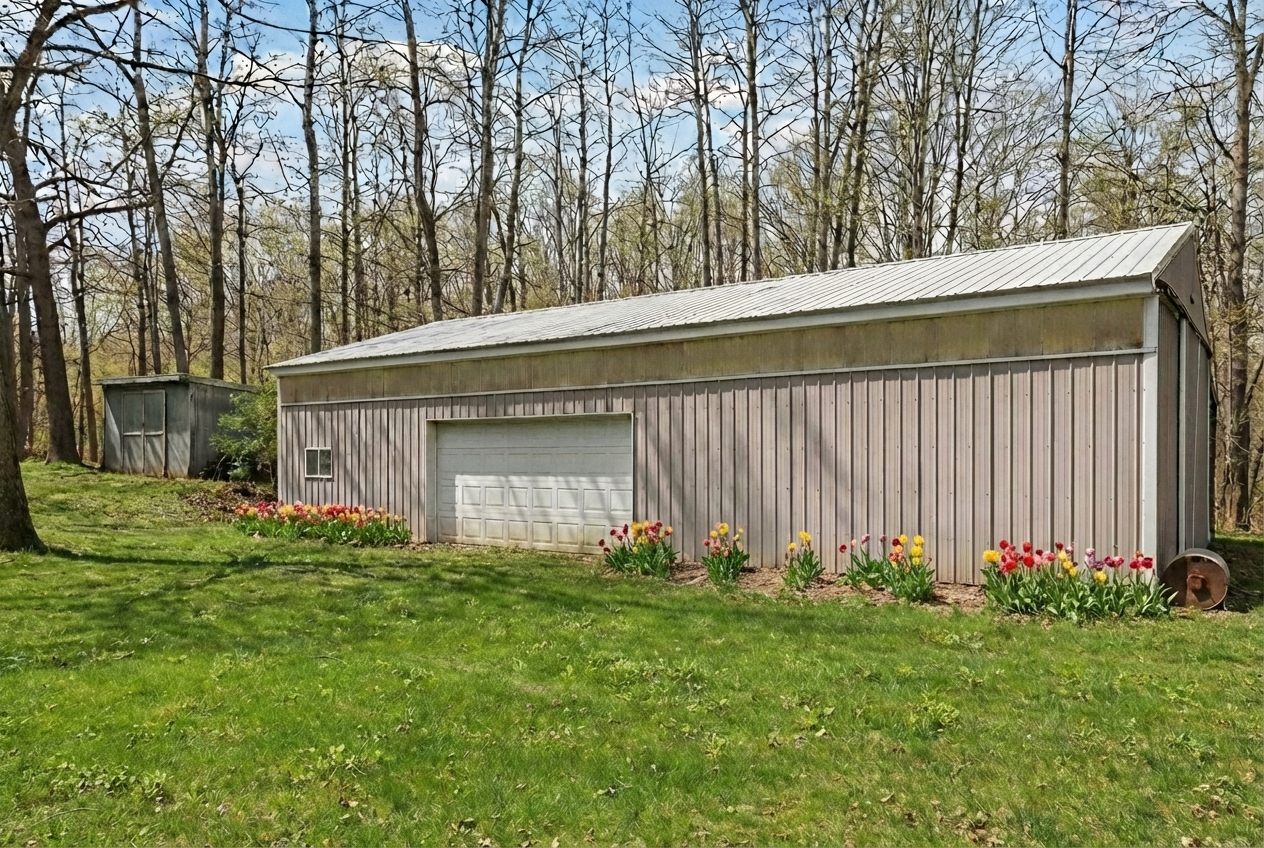
The outbuilding is a large pole barn with electric and it is already divided into two sections. Can part of the barn become an Accessory Dwelling Unit? An Accessory Dwelling Unit (ADU) is a self-contained, smaller residential unit located on the same lot as a primary, single-family home. ADUs feature their own independent living, sleeping, kitchen, and sanitation facilities. They cannot be sold separately from the main home. Might one side be able to be remodeled into an ADU while the other side remains the more typical barn? On this property there are two additional storage options as well. there is a storage shed as well as an addition off the garage that can become a workship or additional storage or……? Alligning households in a situation like this one doesn’t mean sacrificing storage space. There may be room for a well designed and efficient accessory dwelling and still have room for tools, equipment, hobby gear, outdoor toys, projects, or simply the need for a real workspace.
We’ve envisioned an aprtment in the small side of the barn. One side could remain dedicated to traditional “barn activities,” while the other side could be explored as a potential independent living space.
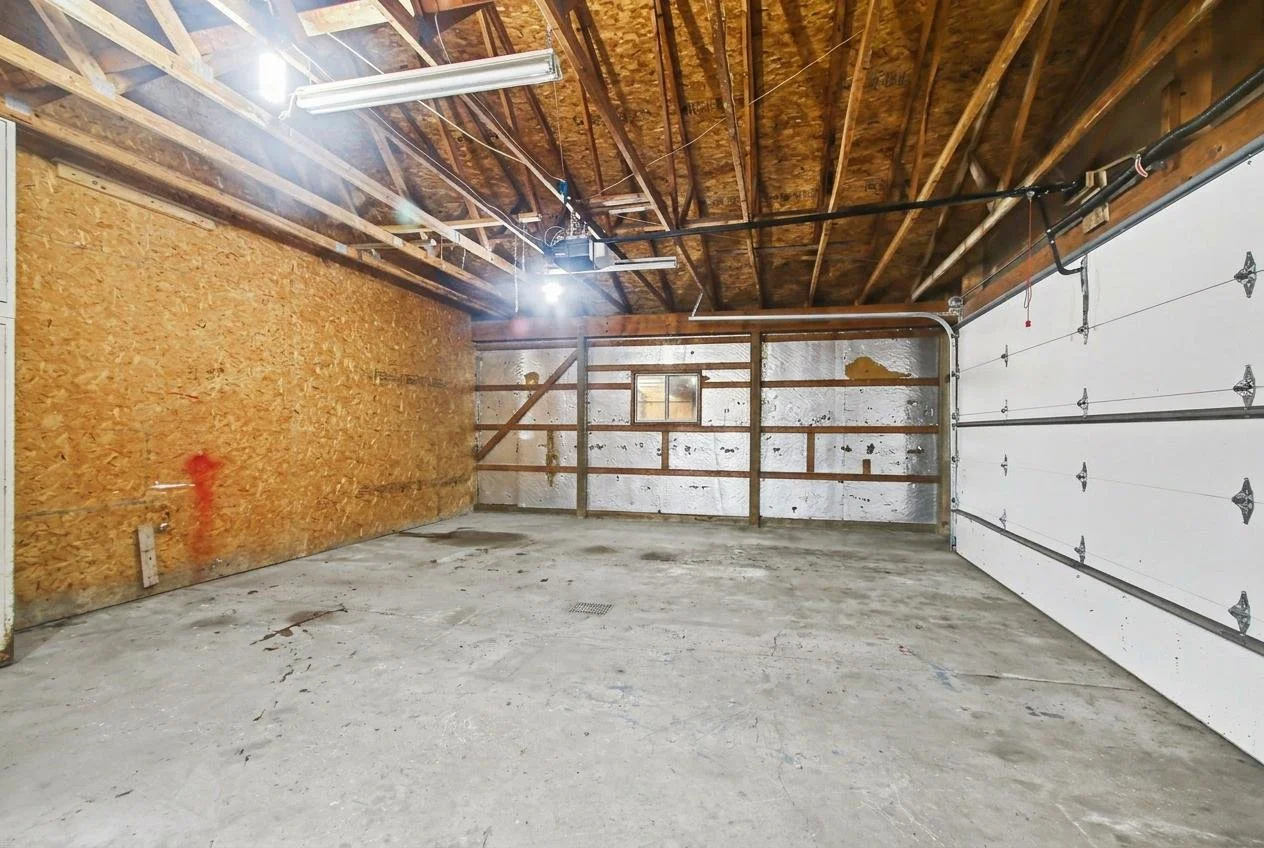
The “small side” of the barn. Might that become an accessory dwelling unit?
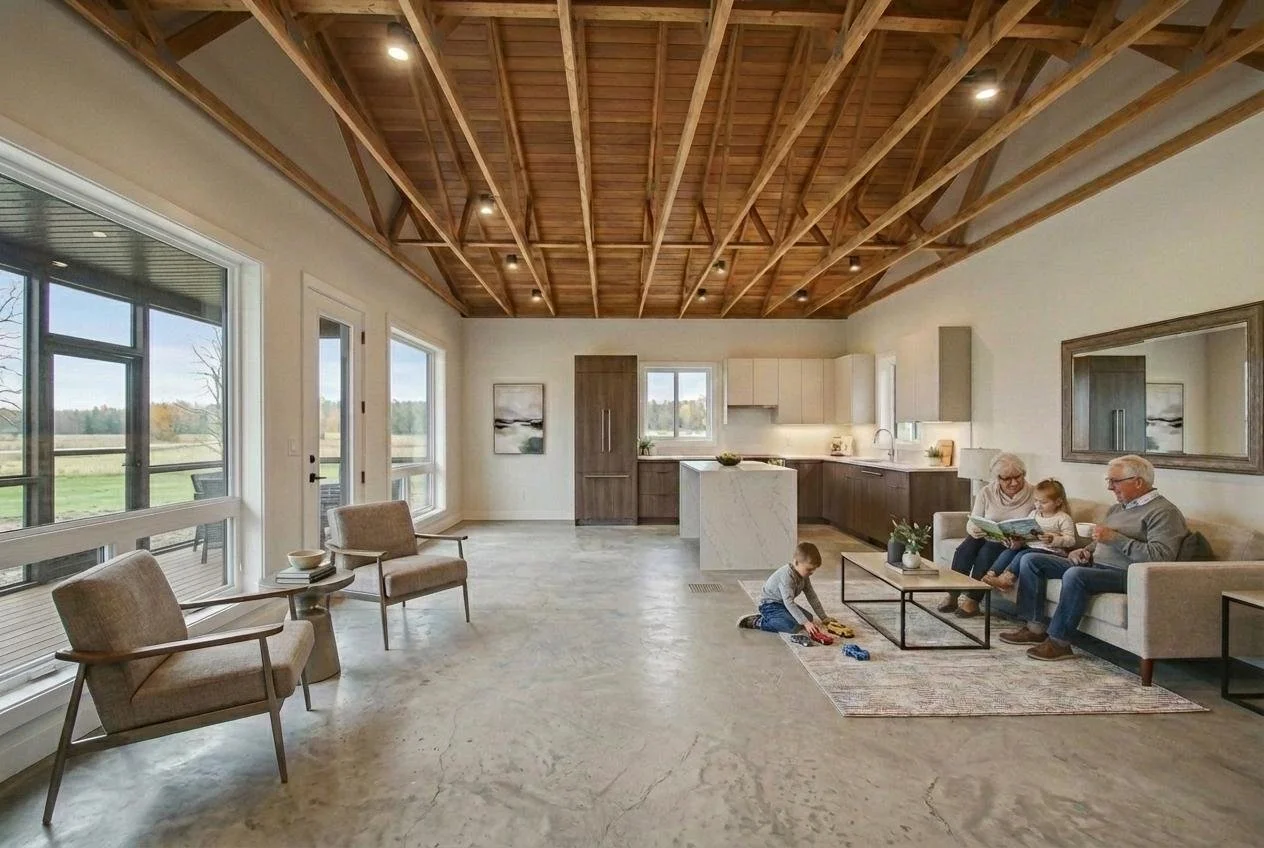
The imagined ADU apartment in the small part of the barn.
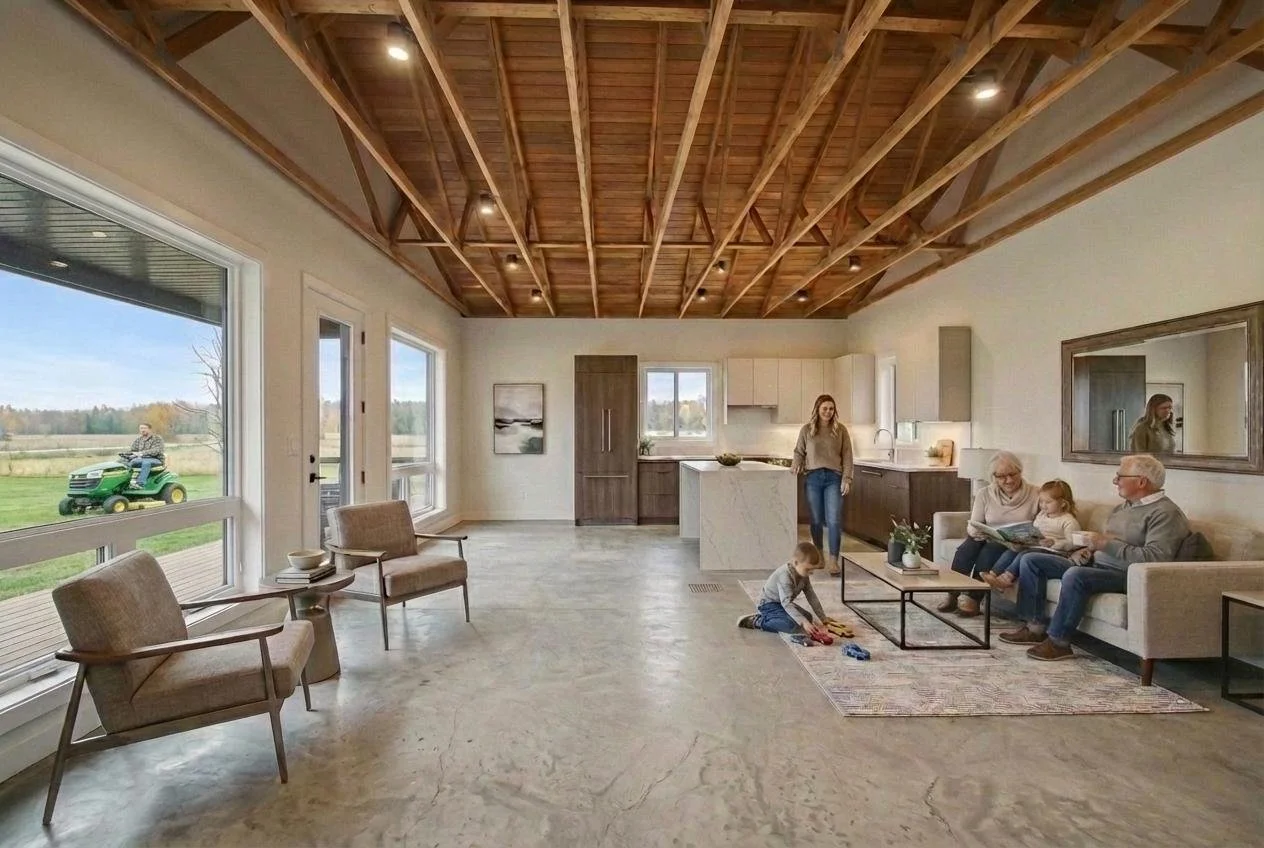
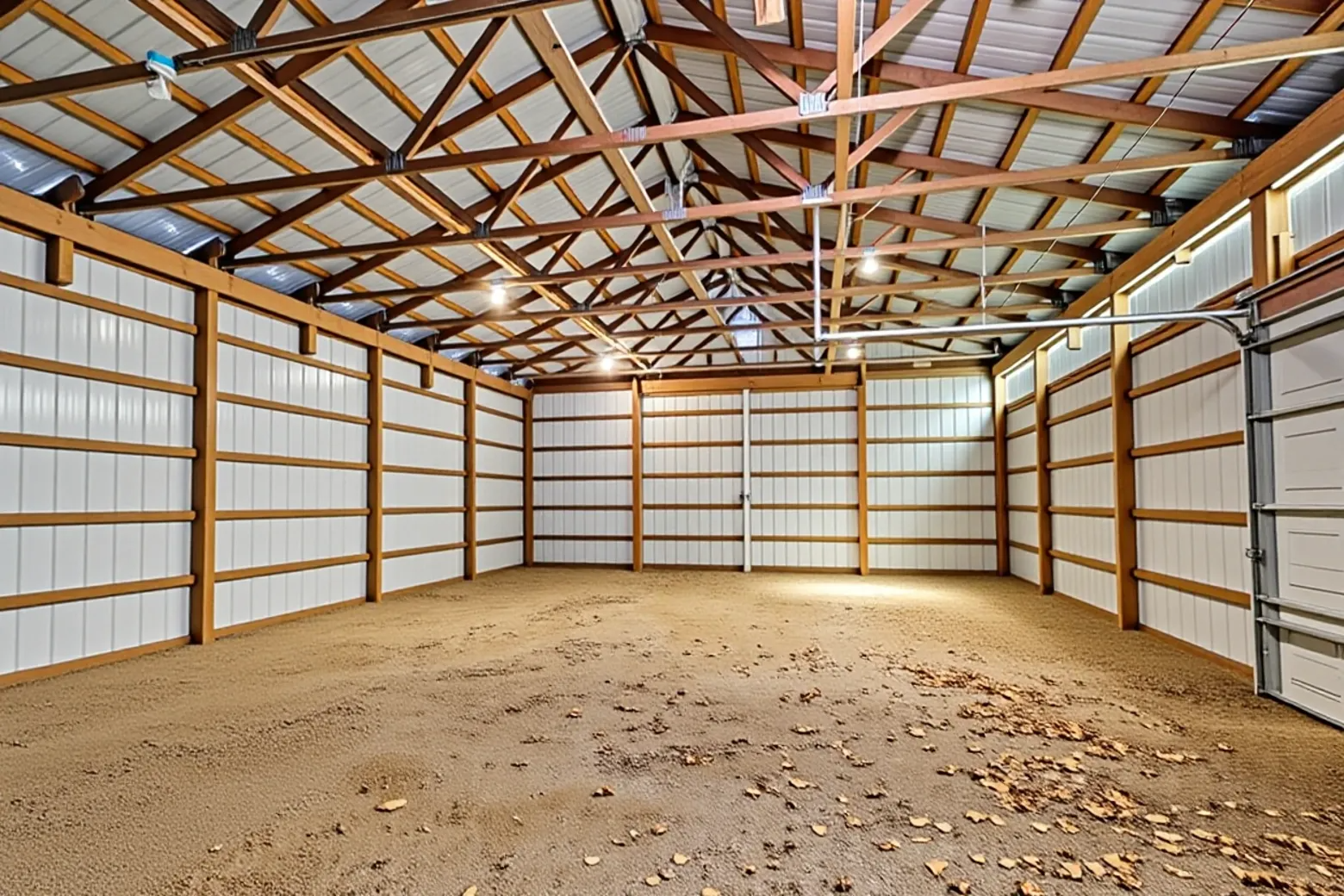
So…..does this space serve as your storage area? Or does this side become the space for an ADU?
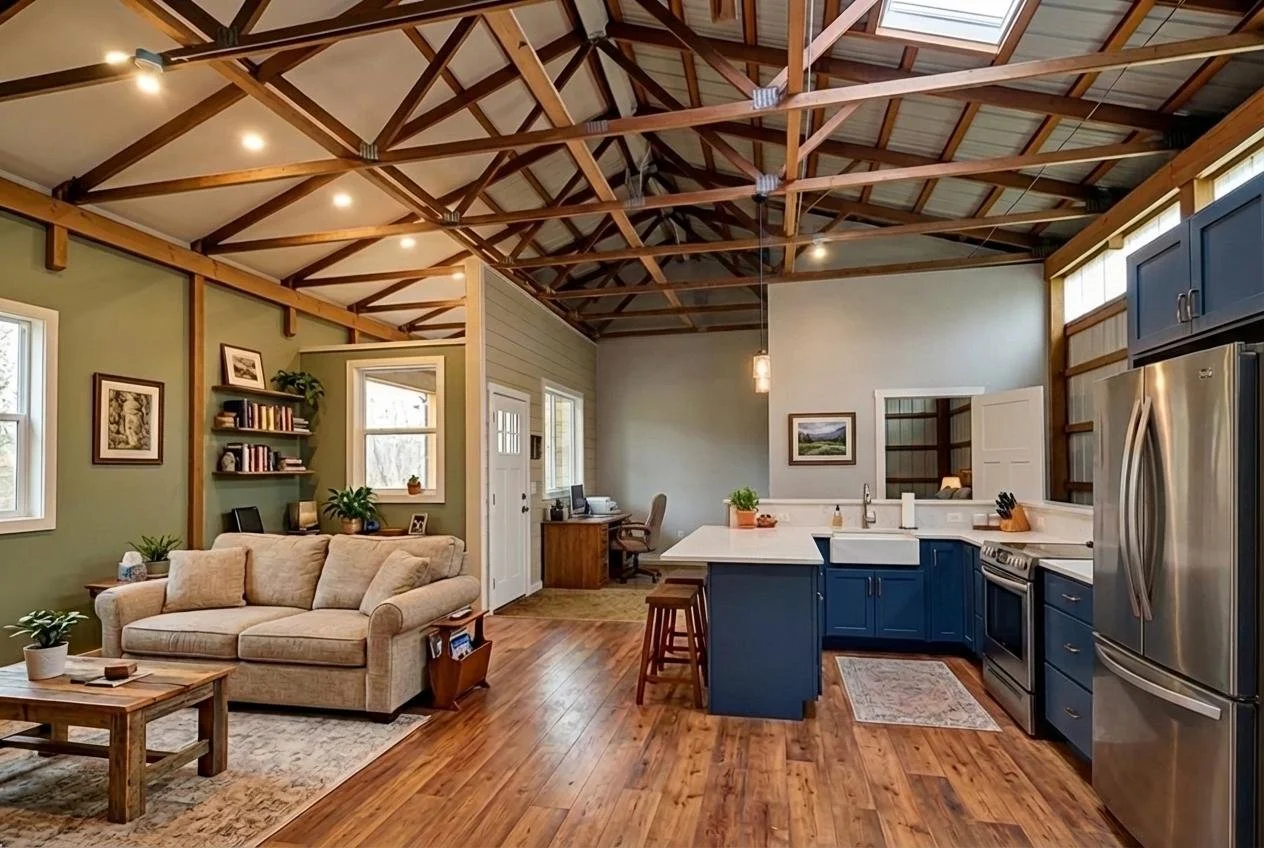
Perhaps you want to use the large side of the pole barn for your ADU apartment.
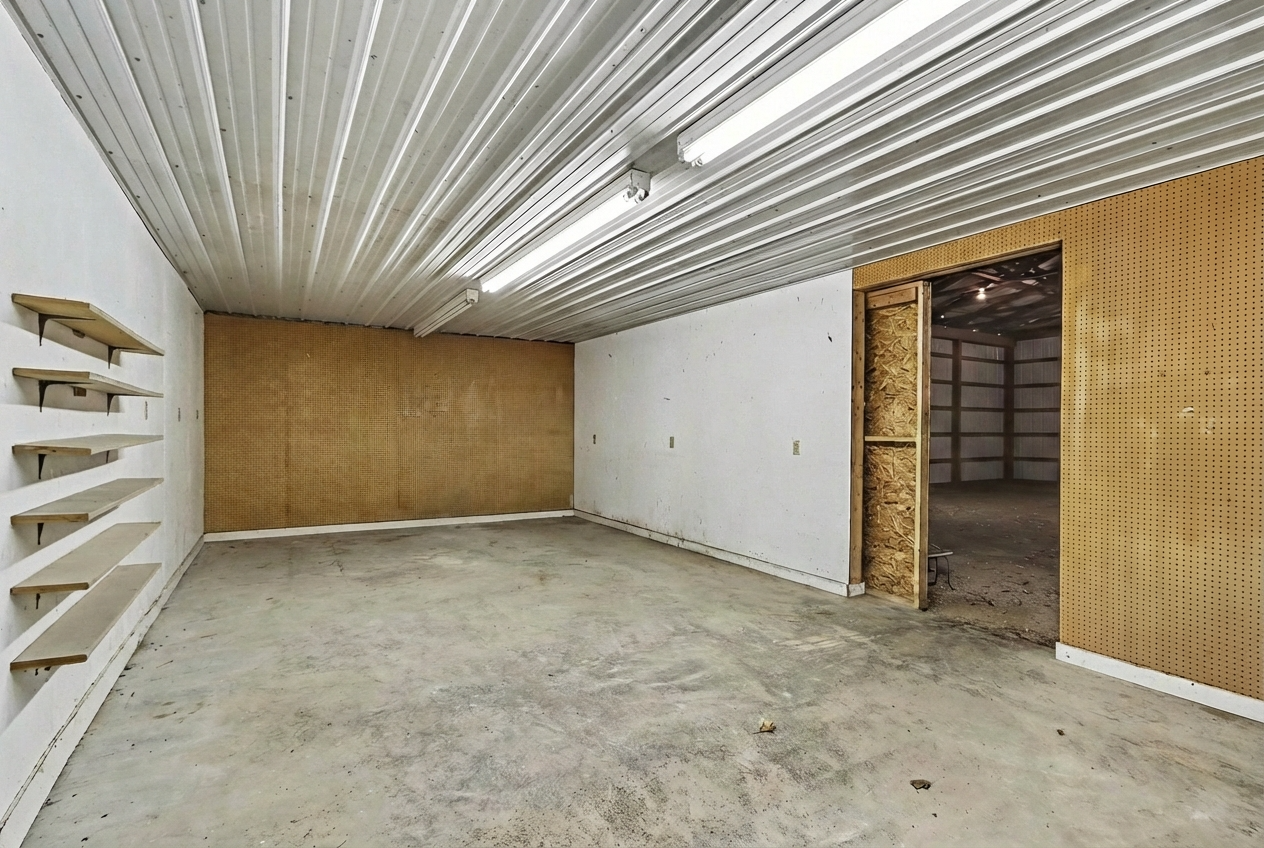
……which then leaves this small side of the barn for “more normal barn type” activities.
Oshtemo Township permits ADUs under defined standards. For sure we would suggest buyers verify zoning, setbacks, utilities, and compliance. But this property deserves some consideration.
The Land: a “Third Anchor”? Privacy, Pace, and Long-Term Value
So, we have already identified that nearly 10 wooded acres within Kalamazoo Public Schools is rare. But acreage is not just about size — it’s about lifestyle and pace and enjoyment. Land is NOT a NECESSARY anchor point for multigenerational living opportunity….the only two NECESSARY anchors are the ability to create independantly connected living spaces….BUT…..the land could be a wonderful bonus in this case.
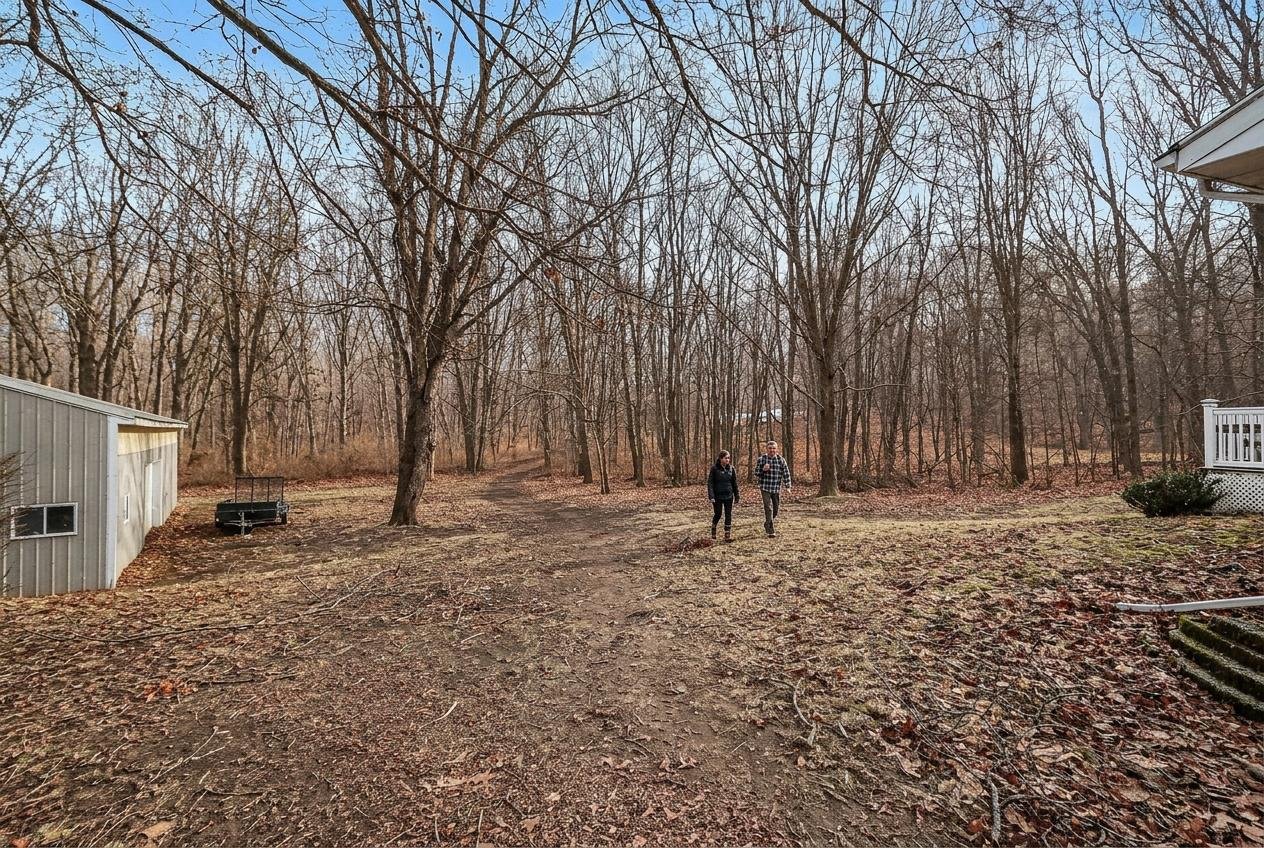
10 acres to enjoy
Imagine quiet mornings on the porch. Trails through the woods. Large gardens. Equipment and hobbies without crowding neighbors.
For a single household, that breathing room has real value.
For a multigenerational household it brings much more to the opportunity.
The land potentially shapes lifestyle —for both parties in an aligned household.
Imagine…..
Shared gardening projects and space for hobbies
Intergenerational proximity with separate living footprints
Morning coffee on separate porches or together
Ability to share meals while maintaining privacy
Babysitting proximity if children are a part of one residence
Snow removal and property maintenance shared across households
Trails, gardens, and outdoor spaces that support a variety of activities
If You Already Know Multigenerational Living Is the Right Fit and 1865 S 8th Street Intrigues You….Connect with the Veenstra Team at 269-350-5514 and lets take a look at this intriguing property.
If you’re intrigued and are ready to move from idea to evaluation, the next step is simple:
Schedule a private showing.
Request a realistic valuation of your current home.
Begin a financing conversation grounded in actual equity numbers.
NOTE: The buyer is responsible to do the research and determine whether this property could be used as a multigenerational property, and there is a 10 day due diligence/investigations period that can be included into an offer to allow that to happen. If during the investigations period the buyer is not satisfied that the multigenerational aspects can be well met, the buyer may withdraw from the contract and get their earnest deposit back. The requirements for Accessory Dwelling Units in Oshtemo towship are available on the web. If you do a google search on the term “Oshtemo township MI accessory dwelling units” you will find lots of great information to jumpstart your research.
If You’re Sensing a Need for Some Changes and are Just Beginning to Consider Your Next Steps for Housing Changes….Keep Reading…..This next section is for you.
Not everyone is ready to look at property yet.
Some are just starting to ask:
Would multigenerational living even make sense for us?
If that’s where you are, the first step is not touring homes.
It’s understanding your current position and the options you may have in front of you….And that’s the path we’ll walk through next.
Senior Lifestyle Decisions Include so Many Choices…..Add Multigenerational Living to the Picture and The Choices have New Depth.
Often before discussing structures or finances, seniors typically begin with lifestyle questions.
Some want freedom from heavy maintenance
Some want freedom to travel
Some want freedom to spend part of the year elsewhere
Some are thinking ahead: What if one of us needs care? What if driving becomes more difficult?
What if we want support nearby without losing autonomy?
Some are motivated relationally:
Some want to be closer to grandchildren
Some want to support loved ones while they raise families
Some want daily interaction instead of occasional visits
And some seniors will decide: “We’re happy where we are. We’ll renovate and stay put.”That is a perfectly valid outcome.
Check out This FrameWork of Questions Seniors Might Use When Evaluating Next-Step Housing Decisions
Major housing decisions are rarely just about square footage.
They are about lifestyle, independence, finances, relationships, and future care.
If you are evaluating what comes next, these are thoughtful questions worth asking.
1️⃣ OPTION 1 - Should I Stay and Modify My Current Home?
Lifestyle Questions
Do I want to remain in my familiar neighborhood?
How important is preserving established friendships?
Would I prefer to age in a home I already know?
Could this home realistically be modified for aging-in-place?
Does the layout support long-term mobility needs?
Financial Questions
What would renovations cost to make this home safer and more functional?
Would I need to use home equity financing?
Even with renovations, will the home still present long-term limitations?
Is the investment improving the home’s long-term value — or simply delaying a larger move?
For many seniors, staying put is the right first consideration.
But it deserves honest evaluation.
2️⃣ OPTION 2 - Do I Want to Move to a Condo?
Lifestyle Questions
Do I want reduced maintenance responsibilities?
Would single-level living improve daily comfort?
How important is lock-and-leave flexibility for travel?
Am I comfortable living in closer proximity to neighbors?
Financial Questions
Am I prepared for a purchase price in the $220,000–$300,000+ range in Greater Kalamazoo?
Am I comfortable with ongoing HOA dues of $150–$500 per month?
Do I understand the long-term association obligations?
How do I feel about limited land ownership?
Condo living can simplify life — but it shifts ownership structure and financial commitments.
3️⃣ OPTION 3 - Would Manufactured Housing Meet My Needs?
Lifestyle Questions
Would a smaller footprint feel freeing or restrictive?
Am I comfortable in a community setting?
Does this environment support my social and care preferences?
Financial Questions
Is the lower upfront purchase price worth the tradeoff of ongoing lot rent?
Am I comfortable with recurring monthly costs of $500–$700+?
How do I feel about not owning the land beneath my home?
Manufactured housing can reduce entry cost — but introduces ongoing expense and different ownership dynamics.
4️⃣ OPTION 4 - Should I Consider a Continuum-of-Care Community?
Lifestyle Questions
Do I want predictable progression of care as needs increase?
Is a built-in social community important to me?
Am I ready to transition into a structured living environment?
Financial Questions
Am I prepared for potentially large buy-in fees?
Can I sustain monthly costs that often reach into the thousands?
How will rising care costs impact long-term financial security?
Continuum-of-care communities offer structure and predictability — but at significant financial commitment.
5️⃣ OPTION 5 Could Multigenerational Living with an Independent Living Suite inside Family Member’s Home or a completely separate ADU Be an Option?
This scenario often involves coordination between two households.
It requires thoughtful communication and planning.
Lifestyle Questions for Seniors
Would I value proximity to family without feeling crowded?
Would daily connection enhance my quality of life?
Would I prefer extended independence with support nearby?
Does this provide peace of mind for potential future care needs?
Lifestyle Questions for the Primary Household
Would nearby childcare support be valuable?
Could property maintenance be shared?
Would shared meals and activities enrich family life?
Is generational learning and daily presence important to us?
A multigenerational property can offer:
Independence with proximity
Separation with connection
Shared support without loss of autonomy
The main home functions independently. Acreage provides natural separation. A 32x56 pole barn with electric offers flexibility for future adaptation.
Financial Questions to Consider in a Multigenerational Living Scenario
When two households are involved, the financial conversation becomes more layered — and more strategic.
As of early 2026:
The average home value in Kalamazoo County is approximately $261,000.
The median sale price is approximately $265,000.
Those numbers matter — not as predictions, but as context.
If both households currently own homes, important financial questions follow.
If the Senior Household Sells
What is the current market value of the home?
Is there an existing mortgage balance — or is the home mortgage-free?
If mortgage-free, how much net equity could realistically be accessed after closing costs?
Could those proceeds fully fund an Accessory Dwelling Unit (ADU) renovation?
Could they significantly reduce a shared mortgage burden?
Would retaining some liquidity be important for healthcare flexibility?
How would this decision impact long-term estate planning?
For many long-term homeowners, equity represents decades of disciplined ownership.
How should that equity be repositioned?
If the Primary Household Also Sells
What is the realistic net equity position after sale?
How would combining equity improve down payment strength?
Would it reduce overall financing costs?
Could it improve loan terms?
Would it create room for renovations in the main home?
Does consolidating equity increase long-term financial flexibility?
When two households combine financial resources intentionally, leverage changes.
What Happens When Resources Are Consolidated?
Instead of maintaining:
Two mortgages (or one mortgage and one HOA structure),
Two insurance policies,
Two property tax bills,
Two maintenance budgets,
Two separate household utility structures,
Resources may be able to be consolidated.
This does not automatically mean “cheaper.” But it may mean more efficient.
And efficiency often supports:
Longer independence
Stronger cash flow management
Reduced financial duplication
Greater adaptability as needs evolve
What Financial Tradeoffs Should Be Evaluated Carefully?
Does consolidating housing increase emotional complexity?
How are ownership percentages structured?
Is there a written agreement between households?
How are future sale proceeds handled?
What happens if one household’s circumstances change?
Is a renovation loan needed — and if so, how does combined income affect qualification?
Would maintaining separate housing provide more personal autonomy despite higher cost?
Efficiency is valuable.
But clarity is essential.
Does Multigenerational Living Automatically Reduce Cost?
Not necessarily.
It may:
Shift expenses.
Improve capital efficiency.
Reduce duplication.
Improve cash flow predictability.
Or it may simply reallocate where resources are applied.
The deeper question is not:
“Is this cheaper?”
The better question is:
“Is this financially aligned with our long-term goals and lifestyle priorities?”
Does Efficiency Extend Independence?
In many cases, yes.
When financial pressure is reduced and proximity increases:
Daily support becomes simpler.
Care can begin gradually rather than reactively.
Large institutional transitions may be delayed.
Equity remains within the family structure rather than dispersing across multiple properties.
But this only works when planning is deliberate.
The Bigger Financial Questions of Multigenerational Living
If two homes worth approximately $260,000 each are sold, what could that combined capital accomplish if structured intentionally?
Reduced borrowing?
Renovation flexibility?
Cash reserves?
Intergenerational stability?
Improved lifestyle alignment?
Multigenerational housing is not just a living decision.
It is a capital allocation decision.
And capital decisions deserve thoughtful modeling — not assumptions.What’s Next If You’re Considering Multigenerational Living — or Any Housing Change?
If you are thinking about multigenerational living — or downsizing, renovating, moving to a condo, or staying put — the first step is not choosing a property.
The first step is understanding what you already have.
Before you compare options, you need clarity on your current position.
And that begins with one foundational question:
What is my home actually worth in today’s market?
Give us a call at 269-350-5514
Why an Accurate Valuation Of Your House Matters When You are Considering Your Next Living Options
If you are considering:
Selling and building an ADU on shared property
Selling and purchasing acreage
Downsizing to a condo
Moving into a continuum-of-care community
Renovating to age in place
…then your current equity position determines what is possible.
An accurate valuation helps you understand:
Likely sale price
Estimated net proceeds
How much capital may be available
Whether renovation is financially realistic
Whether consolidation of resources improves efficiency
Whether staying put actually makes more sense
Without real numbers, decisions are speculative.
With real numbers, decisions become strategic.
Why Online Estimates Are Not Enough
Online home value tools can be helpful for broad curiosity.
But they:
Do not walk through your home.
Do not see upgrades.
Do not evaluate condition.
Do not account for layout advantages.
Do not measure acreage usability.
Do not factor in barns, outbuildings, or multigenerational potential.
Do not understand neighborhood micro-markets in Kalamazoo County or Oshtemo Township.
An algorithm cannot evaluate lifestyle value.
And it certainly cannot evaluate how a property might serve multiple generations.
What Actually Happens When the Veenstra Team Does a Free Market Valuation
What do you need to do before we come? Just make an appointment. Nothing else is needed
The first thing you shoud know is what should happen before we come and that is easy. NOTHING special needs to happen before we come. A Veenstra Team market valuation is free and there is no obligation or pressure for you to sell your house. Think of this as a fact finding mission. You are going to learn information that will help you make wise decisions.
What do we do when we visit?
When we do come at a time that is convenient for you, we walk through your home in person so that we can prepare a professional opinion of value. This walk through is for accuracy purposes. It is NOT to judge and it is not to take pictures. It is NOT to put the house on the market. The house does not need to be show ready. It can have boxes you are sorting, and the clutter that comes with making decisions about moving. The house does not need to look pretty. You don’t need to do the updating projects you think you may want to do. We want to see the house so we are accurate AND so that we can help you do the LEAST amount of updating to be able to reach your goals. We OFTEN tell people, painting or updating in this situation will not help you make more money or sell the home in the time frame you want. Call us BEFORE you make any updating decisions.
What do we do after we visit? We research and study:
We find recent comparable sales, your current competition, buyer demand in your price range. Then we evaluate what makes your property unique — acreage, barns, layout flexibility, upgrades, and long-term marketability.What do we do after we do our research? We share it with you
We sit down with you and review: A realistic value range for your home, what cash you can be expected to get after all the costs of selling, how long it is estimated to get it sold and how we will accomplish getting your home sold.
What do you do after you learn the results? That is for you to decide and because you will know how much your home is worth and how much you are expected to earn from the sale, you can make decisions with much better clarity. We would love to go to work for you if you decide to sell, but you are not obligated to us in any way.
Complete the form below if you would like us to explore your options with you and start gathering the info you need for decision making.