How do you estimate property taxes on a new Kalamazoo home?
Estimate a new home's property taxes using its expected state equalized value (SEV), the homestead millage rate for its municipality and school district, and any special assessments—not the current tax bill on the vacant lot. In Michigan, completed construction is added to the assessment roll, and a transfer can uncap taxable value, so the first stabilized tax bill may be thousands of dollars higher than the land-only bill you see before closing.
By Jason Veenstra | August 20, 2026
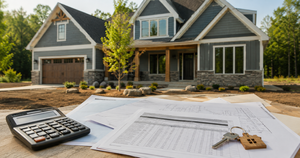
If you're comparing a $500,000 new build with a $500,000 resale home in Greater Kalamazoo, the new build may appear to have dramatically lower property taxes. That usually isn't a tax advantage. It often means the public record still reflects vacant land, a partially completed house, or an assessment established before the finished home was placed on the roll.
This is one of the most important numbers to correct before you sign a builder contract. If your lender initially escrows taxes using an incomplete assessment, your monthly payment can rise after the full home value reaches the tax roll. You may also face an escrow shortage because the account collected too little during the earlier months.
The good news is that you can build a responsible estimate before closing. It won't be a guarantee—the local assessor determines value, and millage rates can change—but it can prevent you from basing a major purchase on the wrong tax bill.
Why the current tax bill can be misleading
Michigan property-tax records show several values, and they do different jobs:
True cash value is the assessor's estimate of the property's market value.
State equalized value (SEV) is generally 50% of true cash value.
Taxable value is the number to which the millage rate is applied.
Principal residence exemption (PRE) can remove the local school operating millage for an eligible owner-occupied principal residence.
For an existing home held by the same owner for years, taxable value may be well below SEV because annual taxable-value increases are generally limited to the lesser of inflation or 5%, excluding additions and losses. After a transfer of ownership, taxable value generally uncaps in the following year and becomes equal to SEV, subject to Michigan's assessment rules. The actual sale price is evidence, but Michigan assessors do not automatically set SEV at exactly half the sale price based on that sale alone.
New construction adds another layer. A parcel may begin the year as vacant land. As the house is completed, the value of that improvement is added to the property. That means the tax amount shown on a listing, builder worksheet, or county record may tell you what the owner paid on the land—not what you'll pay after the completed home is assessed.
Michigan Treasury provides a property-tax estimator, and Kalamazoo County links buyers to its parcel search and the current-year property-tax estimating tools. Use those tools as estimates, then verify the assumptions with the local assessor and treasurer.
A realistic Kalamazoo-area example
Suppose you're buying a newly completed home for $550,000 in Texas Township with Mattawan schools. For a planning estimate, you might start with an estimated future SEV of $275,000—50% of the purchase price—while clearly understanding that the assessor will establish the actual value.
The published 2025 total homestead millage for that township-and-school combination was approximately 32.6427 mills. The rough calculation would be:
$275,000 × 32.6427 ÷ 1,000 = $8,976.74 per year
That is about $748 per month before any 1% administration fee, special assessments, or future millage changes. The same property without a valid PRE would use a higher non-homestead rate. This example uses the most recently available published rate as of this writing, not a promise of your future bill.
Now imagine the vacant-land tax record shows only $1,500 per year. Budgeting from that figure would understate taxes by roughly $623 per month in this example. When the lender completes an escrow analysis after the full assessment arrives, the payment increase could include both the higher ongoing tax deposit and a temporary amount to repay the shortage.
This is why I tell new-construction buyers to treat the current parcel tax bill as a historical document, not a future housing budget.
Build the estimate before you sign
Whether you're considering Allen Edwin Homes, Cornerstone Construction, Hoogstraten Builders, or another Southwest Michigan builder, use the same disciplined process.
Confirm the exact taxing jurisdictions. A mailing address alone is not enough. Identify the city or township, village if applicable, school district, county, and any special-assessment district. A Texas Township address, for example, may fall within Kalamazoo, Mattawan, Portage, or Schoolcraft schools, and the millage differs.
Ask what the current assessment includes. Is the record vacant land, partially completed construction, or a finished home? Find out when the certificate of occupancy is expected and when the assessor anticipates the improvement appearing on the roll.
Estimate future SEV conservatively. Half the purchase price is a common planning starting point, not a guaranteed assessment. Ask the assessor how comparable new homes are being valued and have your lender run more than one scenario.
Use the correct PRE assumption. If the home will be your principal residence and you qualify, make sure the Principal Residence Exemption Affidavit is completed and filed. Deadlines and occupancy timing matter. If this is a second home, rental, or other non-principal residence, budget with the non-homestead millage.
Include costs the estimator leaves out. Kalamazoo County notes that the state estimator does not include special assessments, administrative fees, penalties, or interest. Newer developments may also have association dues or private road obligations, which are separate from property taxes but still affect your monthly budget.
Have the lender model the stabilized payment. Ask for a payment estimate using the expected completed-home taxes, not only the taxes currently attached to the parcel. Then ask what happens if the initial escrow account is based on the lower land assessment.
Keep a reserve for the transition. Even a careful estimate can miss the assessor's final value, a new millage, or the timing of the first complete bill. A reserve protects you from treating an escrow adjustment like an emergency.
These tax questions belong in the same early planning conversation as financing, appraisal, inspection, and a sale-of-home contingency. If you still own a house, the timing matters even more: the cost of carrying two homes should use realistic taxes on both properties.
My guide to financing a new-construction home in Southwest Michigan explains the loan side of that coordination. If you're earlier in the process, review the first steps to building a house in Southwest Michigan before choosing a lot, builder, and lender.
Who should verify each number?
Your real estate agent can help you identify the parcel, compare locations, coordinate the builder and lender, and spot a land-only tax figure that doesn't make sense. Your lender determines how taxes affect qualification, cash to close, and escrow. The local assessor establishes value, while the treasurer applies the tax rates and collects the bill.
For legal or tax advice about ownership structure, exemptions, or an unusual transfer, consult a qualified Michigan attorney or tax professional. General estimates are useful for planning, but they don't replace the officials and licensed professionals responsible for your specific situation.
Frequently Asked Questions
Why are the taxes so low on a new-construction listing?
The displayed taxes may be based on vacant land or a partially completed home. Once the completed improvement is assessed, the taxable value and annual bill can rise substantially.
Does Michigan automatically assess my home at half the purchase price?
SEV is generally 50% of true cash value, but the assessor cannot use the property's sale price as the sole basis for the assessment. Half the price is a practical budgeting assumption, not a guarantee of the final SEV.
When does taxable value uncap after a Michigan home purchase?
After a transfer of ownership, taxable value generally uncaps in the following calendar year and becomes equal to SEV, subject to statutory exceptions. New construction can also be added to taxable value as the improvement is placed on the assessment roll.
How does the Principal Residence Exemption affect my taxes?
For a qualifying Michigan principal residence, the PRE generally exempts the property from up to 18 mills of local school operating tax. It does not eliminate all property taxes, and you must file the required affidavit and meet the eligibility rules.
Can my mortgage payment increase even with a fixed interest rate?
Yes. A fixed rate keeps principal-and-interest terms stable, but the escrow portion can change when property taxes or insurance change. A new build's payment may rise after the full completed-home assessment replaces the earlier land-only figure.
Plan from the completed home—not the vacant lot
The safest new-construction budget uses a reasonable completed-home SEV, the correct local homestead or non-homestead millage, and a cushion for fees, assessments, and timing. That gives you a far better picture than the tax figure currently attached to the lot.
If you'd like help comparing a Kalamazoo-area build with a resale home—or want the builder, lender, sale-of-home, and tax timelines coordinated—schedule a 15-minute call with me. You can also contact the Veenstra Team, call or text 269-350-5514, or email sold@veenstrateam.com.
Relocating to Southwest Michigan? Download The Local's Guide to Moving to Kalamazoo for a practical overview of the communities and everyday considerations you'll want to compare.
About Jason Veenstra
Jason Veenstra is a second-generation REALTOR®, Associate Broker, and leader of the Veenstra Real Estate Team, brokered by eXp Realty, serving buyers and sellers throughout Greater Kalamazoo and Southwest Michigan. Backed by a family team with nearly 40 years of local real estate experience, Jason specializes in residential sales, relocation, luxury homes, and new construction.