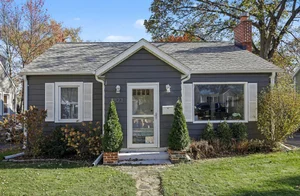
How much cash do you need to close on a Kalamazoo home?
Plan on your down payment plus closing costs that typically run about 2% to 5% of the purchase price, according to Freddie Mac, minus your earnest money and any credits. In Michigan, the seller customarily pays the state and county transfer taxes, the owner's title insurance policy, and the $30 recording fee, while the buyer usually pays lender charges, the lender's title policy, and prepaid insurance, interest, and escrow. Your exact number appears on the Closing Disclosure, which you must receive at least three business days before closing.
By Jason Veenstra | November 23, 2026
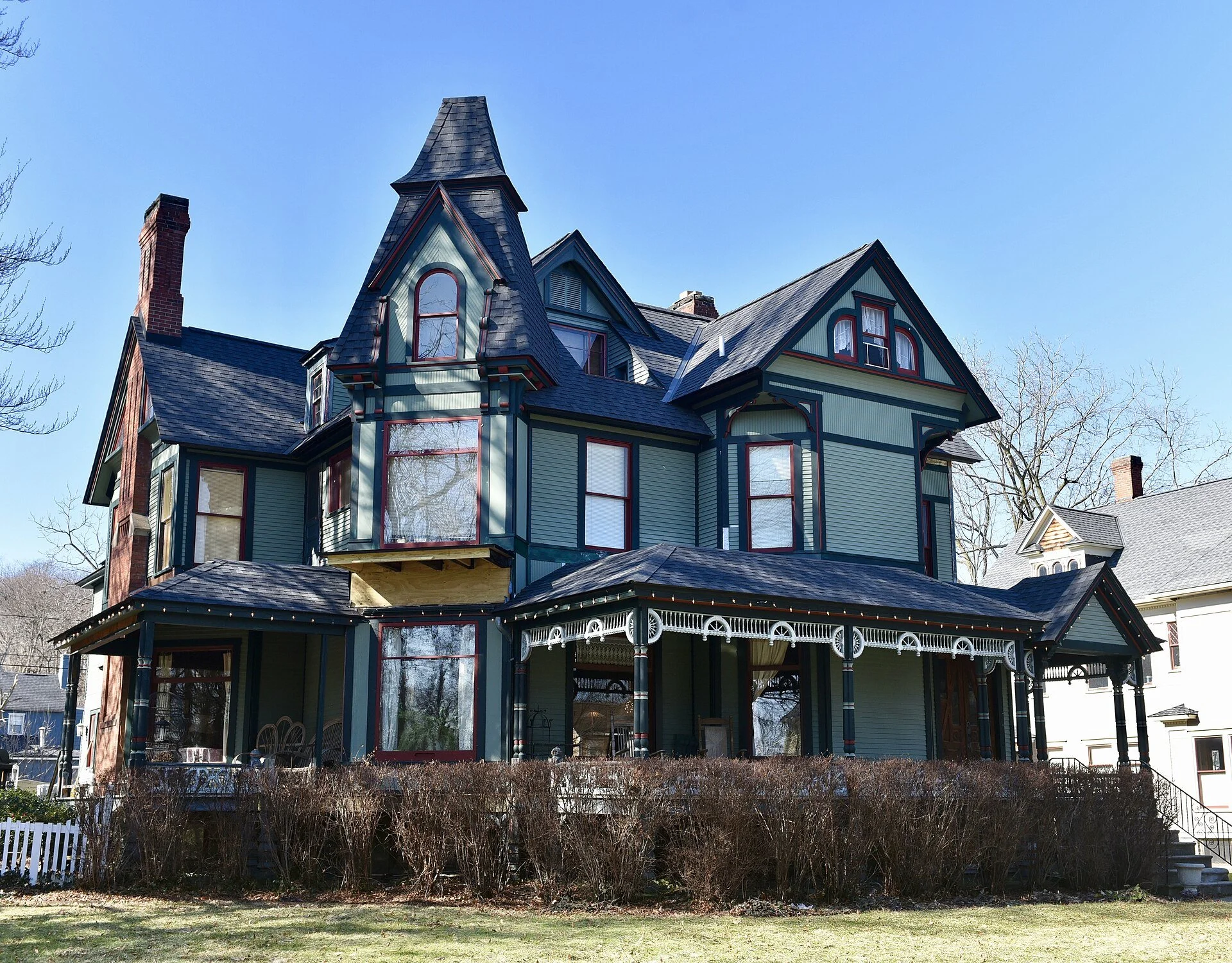
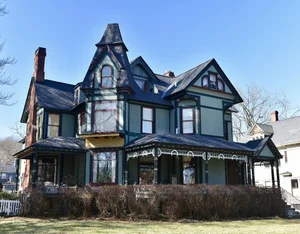
A Victorian home on Stuart Avenue in Kalamazoo's Stuart Area Historic District. Home shown is for illustration only. Photo: Jim Roberts via Wikimedia Commons, CC BY-SA 4.0.
Most buyers I work with have a down payment number in their head. The question that catches people off guard comes later: "Wait, how much do I need to bring to closing?"
That's a fair question, and it deserves a real answer before you write an offer, not the week before you sign. When you know your cash to close early, you can shop with confidence, write a cleaner offer, and avoid scrambling for funds at the last minute.
Here's how it works for buyers in Kalamazoo, Portage, and the surrounding townships, and what you can do to bring the number down.
What goes into your cash to close?
Your cash to close is the money required at the title company for closing day. The basic math looks like this:
Your down payment
Plus your closing costs (lender, title, and government fees)
Plus prepaids (homeowners insurance, prepaid interest, and the deposit that starts your escrow account)
Minus your earnest money deposit, which is credited to you at closing
Minus any seller credits, lender credits, or down payment assistance
For a rough sense of scale, Freddie Mac says closing costs typically run 2% to 5% of the purchase price. On a $250,000 home, that's about $5,000 to $12,500 on top of your down payment. That's an illustration, not a quote. Your loan type, rate, insurance, and closing date all move the number.
Down payments vary just as much. Freddie Mac notes they typically range from 3% to 20% of the price, and some loan programs allow less. If you're wondering how your deposit fits in, my guide to earnest money deposits explains how it's held and credited back at closing.
Which closing costs do Kalamazoo buyers usually pay?
Who pays what in Michigan comes down to local custom and, more importantly, your purchase agreement. Fidelity National Title’s guide to state customs lists the usual Michigan splits. Here's what buyers typically cover:
Lender charges. Origination or underwriting fees, the appraisal, the credit report, and any discount points you choose. Freddie Mac notes origination fees typically run 0.5% to 1% of the loan amount.
The lender's title insurance policy. It protects your lender, and it's customarily a buyer cost in Michigan.
Your share of the closing fee. The title company's settlement fee is customarily split between buyer and seller, and you may see additional loan closing fees.
Prepaids. Most lenders require your first year of homeowners insurance to be paid at or before closing, plus prepaid daily interest from your closing date through the end of that month.
Your escrow deposit. If your lender escrows taxes and insurance, you'll fund that account at closing. Federal rules cap the extra cushion a lender can require at one-sixth of a year's escrow payments, or about two months.
What the seller customarily pays: the owner's title insurance policy, the $30 recording fee, and Michigan's state and county transfer taxes, which together come to $8.60 per $1,000 of the sale price in Kalamazoo County. If you're selling one home and buying another, my breakdown of seller closing costs in Kalamazoo covers that side of the table.
Customs aren't law. In a competitive situation, a buyer might agree to pay a cost the seller usually covers. In a slower one, a seller might cover more. Whatever you negotiate in the purchase agreement is what happens at closing.
Costs you'll pay before closing day. A few costs come due before you ever see a Closing Disclosure. Your home inspection is paid directly to the inspector, and many lenders collect the appraisal fee up front. Set money aside for these separately from your cash to close.
Buyer agent compensation belongs in this conversation too. Since August 17, 2024, agents working with buyers need a written agreement before touring homes, and it spells out how the agent is paid. A seller may agree to cover some or all of it, but you'll want to know your exposure up front. I explain how that works in Do You Still Need to Pay a Buyer’s Agent Commission?
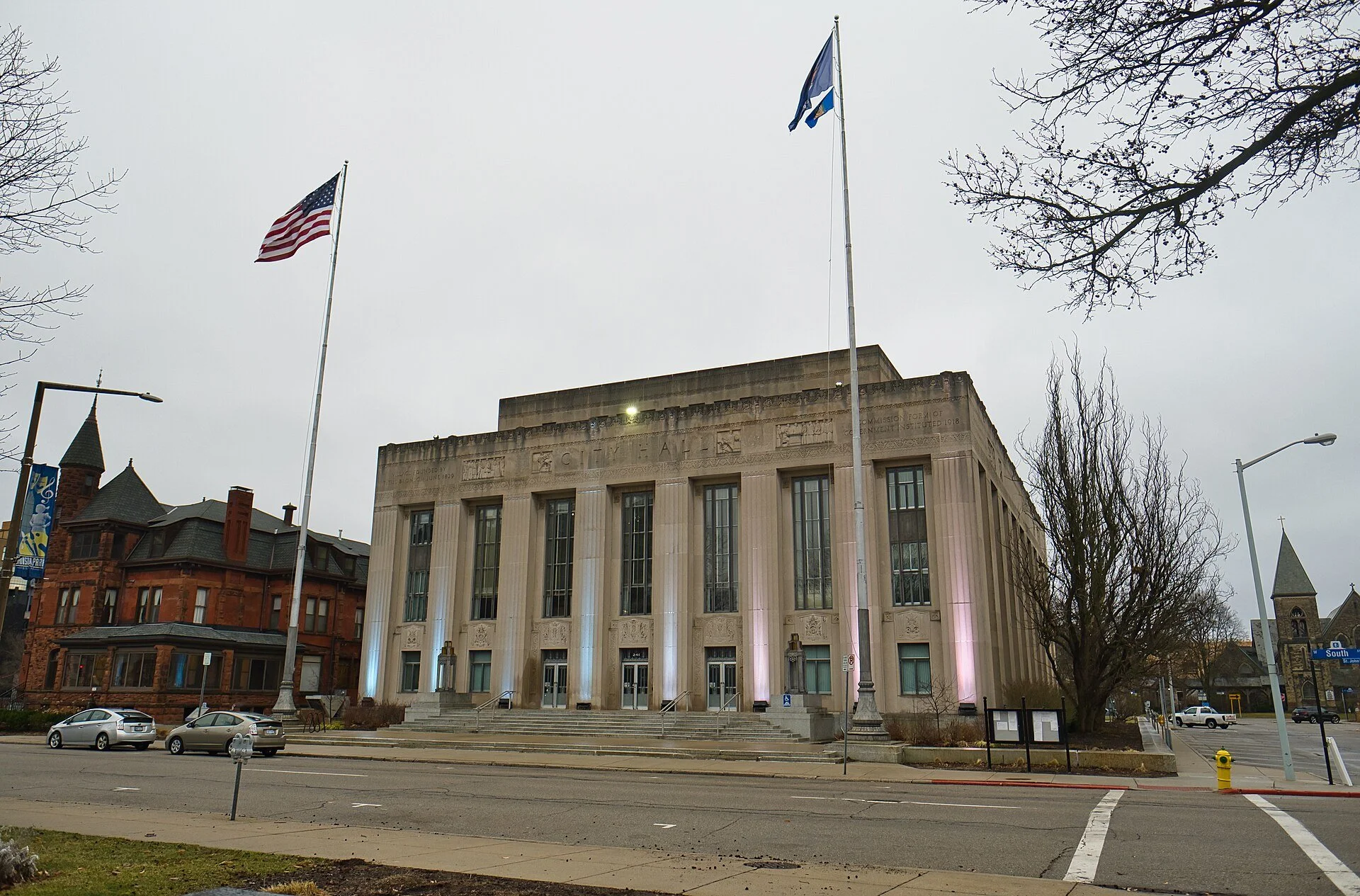
Kalamazoo City Hall at 241 W. South Street, where the City Treasurer's office handles city property tax payments. Photo: Chris Rycroft via Wikimedia Commons, CC BY 2.0.
How do property taxes affect what you bring to closing?
Property taxes deserve their own conversation, because Michigan's system makes them easy to misread.
At closing, taxes are prorated between you and the seller according to your purchase agreement. Inside the City of Kalamazoo, summer tax bills are mailed by July 1 and due July 31, and winter bills are mailed by December 1 and due February 14. Other cities and townships set their own schedules, so a closing in Portage or Oshtemo Township may look different. If you're closing near a billing date, as many late-fall buyers are, ask the title company exactly how the open bill will be handled.
The bigger surprise often comes after closing. In Michigan, a home's taxable value is capped while one owner holds it, then uncaps the year after a transfer of ownership. That means the seller's tax bill can be lower than what you'll pay. I walk through taxable value, SEV, and uncapping in my post on how property taxes are calculated in Kalamazoo.
That's why I talk through property taxes with buyers before we write an offer, and I recommend having your lender walk you through both the current taxes and the estimated taxes after purchase. Your escrow deposit and monthly payment are built from those numbers, so you'll want the full financial picture early.
Two forms to file after you close. Neither costs anything to file, but missing them can. As the new owner, you need a Property Transfer Affidavit (Form 2766) filed with the city or township assessor within 45 days of the transfer, and late filing on a principal residence carries a penalty of $5 a day, up to $200. To receive the principal residence exemption, which exempts your home from up to 18 mills of school operating tax, you also need a Principal Residence Exemption Affidavit (Form 2368) on file. Filing by June 1 counts for that year's summer levy, and filing June 2 through November 1 counts beginning with the winter levy. The title company we work with typically files both forms for you after closing, so you don't have to worry about them. It's still smart to follow up with the assessor once they've been filed to make sure both were received and the exemption was applied.
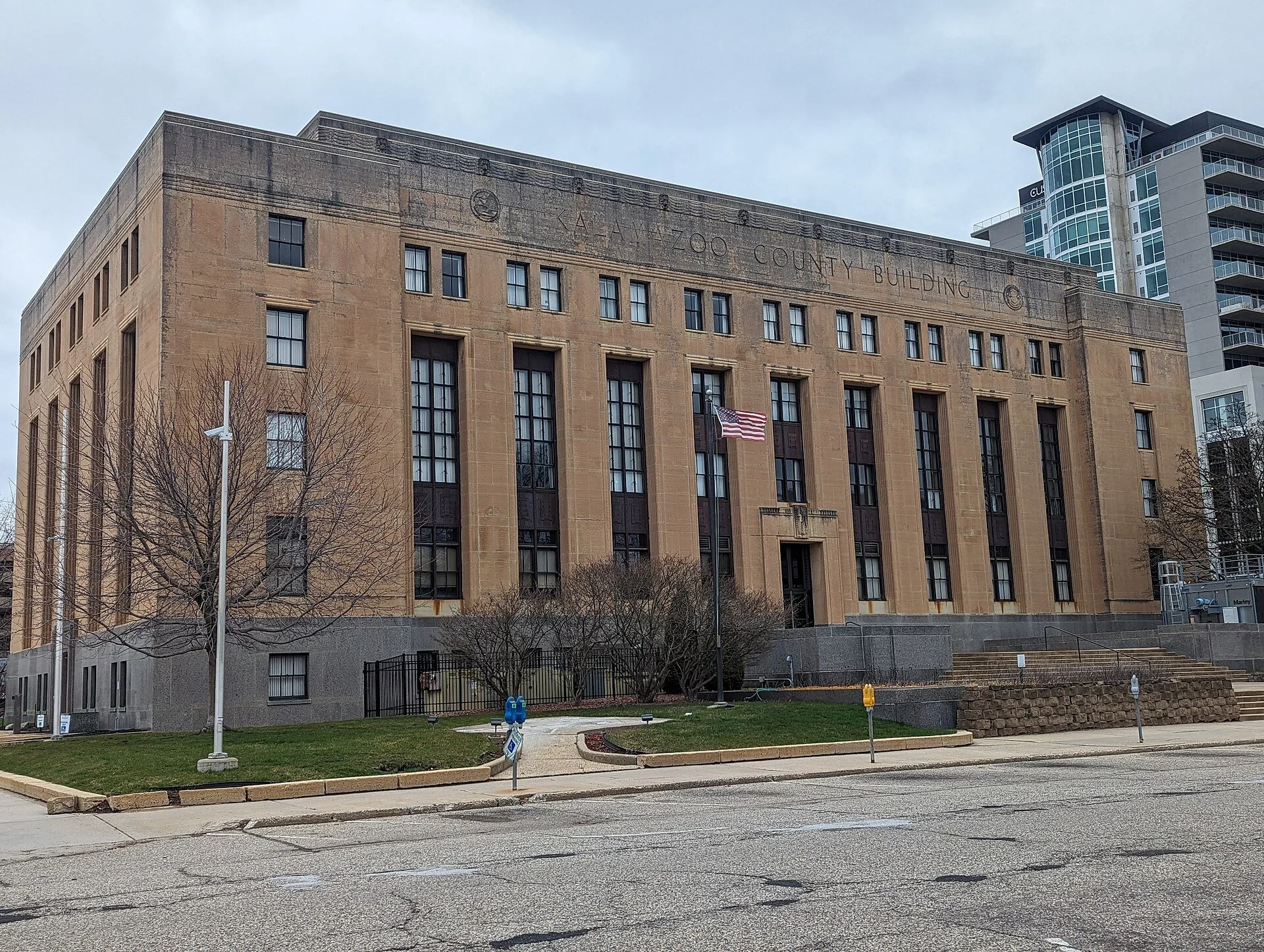
The Kalamazoo County Courthouse, marked "Kalamazoo County Building," in downtown Kalamazoo. Photo: MSwierenga via Wikimedia Commons, CC0 1.0 (public domain dedication).
How can you lower the cash you need to close?
You have more options than most buyers realize. A few worth asking about:
Seller credits (concessions). You can ask the seller to pay part of your closing costs in the purchase agreement. Loan programs cap it. For a conventional loan on a primary residence, Fannie Mae allows 3% of the price with less than 10% down, 6% with 10% up to 25% down, and 9% with 25% or more down. VA limits seller concessions to 4% of the home's reasonable value but doesn't limit credits toward normal closing costs.
Lender credits. Lender credits lower your upfront costs in exchange for a higher interest rate. Ask to see both options side by side over the years you expect to keep the loan.
MSHDA down payment assistance. The MI 10K DPA offers up to $10,000 toward down payment, closing costs, and prepaid expenses for eligible low- and moderate-income buyers. It's an interest-free loan with no monthly payments, repayment is deferred until events such as a sale, refinance, or payoff of the first mortgage, and it must be paired with a MSHDA MI Home Loan. My guide to down payment assistance programs covers how these work.
Comparing Loan Estimates. Lenders must send a Loan Estimate within three business days of your application, so you can compare offers line by line.
A seller credit isn't free money. The CFPB points out that a seller who gives a credit will usually want a higher price in return, and the home still has to appraise. Sometimes a lower price is the better ask. If an inspection turns up issues, my post on repairs versus a seller credit walks through how lenders treat that kind of credit.
Protect your closing funds. Wire fraud targets buyers right before closing. Before you send money, call your title company at a number you already know, not one from an email or text, and treat any last-minute change to wiring instructions as a red flag. NAR’s consumer guide covers the warning signs. If something goes wrong, call your bank immediately and report it to the FBI at ic3.gov.
You don't need a pre-approval or a house picked out to have this conversation. Many buyers wait to call until they've found the home, but this kind of planning is easier while you're still deciding whether, when, and where to buy. I'll help you sort out which decisions come first and what to line up. Call or text (269) 350-5514, email sold@veenstrateam.com, or book a 15-minute call.
Your 3-step plan
Start with a quick call. Tell me your price range, your timing, and how much you've set aside. Call or text (269) 350-5514, email sold@veenstrateam.com, or book a 15-minute call.
Get a real Loan Estimate. Ask a lender partner for a Loan Estimate at your target price, built on the estimated taxes after purchase, not just the seller's current bill.
Write your offer with the cash in mind. We'll decide together whether to ask for seller credits, a lower price, or a cleaner offer, then check every line of your Closing Disclosure before you sign.
Want to know what your cash to close would look like on a Kalamazoo-area home? I'd be glad to run the numbers with you.
Frequently Asked Questions
Who pays closing costs in Michigan, the buyer or the seller?
Both. By Michigan custom, the seller pays the transfer taxes, the owner's title insurance policy, and the $30 recording fee, and the buyer pays lender charges, the lender's title policy, and prepaids. The title company's closing fee is customarily split, and your purchase agreement can change any of these.
How much are buyer closing costs on a $250,000 home in Kalamazoo?
Using Freddie Mac's typical range of 2% to 5% of the purchase price, about $5,000 to $12,500, plus your down payment. Your actual number depends on your loan, rate, insurance, and closing date, so get a Loan Estimate for the price range you're shopping.
Do buyers pay transfer tax in Michigan?
Usually not. Michigan's state and county transfer taxes are customarily paid by the seller, and in Kalamazoo County they total $8.60 per $1,000 of the sale price. The seller typically pays the $30 recording fee as well.
Can I roll closing costs into my mortgage when I buy?
Generally not on a purchase, because your loan amount is based on the price and your down payment. A few loan-specific fees can be financed, such as the VA funding fee, but on a VA purchase loan the VA says other fees must be paid at closing. Seller credits, lender credits, and down payment assistance are the usual ways to reduce what you pay out of pocket.
When will I know exactly how much to bring to closing?
Your lender must give you a Closing Disclosure at least three business days before closing, and it shows your final cash to close after earnest money and credits. Before you wire anything, confirm the instructions by phone with your title company at a number you already know.
About Jason Veenstra
Jason Veenstra is a REALTOR® with the Veenstra Team, brokered by eXp Realty, serving buyers and sellers across Greater Kalamazoo and Southwest Michigan. Licensed since 2009, Jason brings extensive local market experience and a family real estate tradition dating to the 1980s. He helps clients navigate existing-home purchases and sales, relocation, and new construction.
Reach Jason and the Veenstra Team: call or text (269) 350-5514, email sold@veenstrateam.com, or book a 15-minute call.