What should you do after paying off your house in Kalamazoo?
Before you send the last payment, request a payoff quote from your servicer — the balance on your statement usually isn't the amount that closes the loan. Once the payoff posts, cancel autopay, watch for your escrow refund (federal rules generally give the servicer 20 business days), and set up property tax payments with your city or township treasurer, because escrow will no longer pay those bills. Call your insurer to remove the lender from the policy, and don't let coverage lapse. In Michigan, the lender must record a mortgage discharge with the county register of deeds within 60 days; in Kalamazoo County you can confirm that in the Register of Deeds' online records search. Paying off the loan does not change your principal residence exemption.
By Jason Veenstra | November 19, 2026
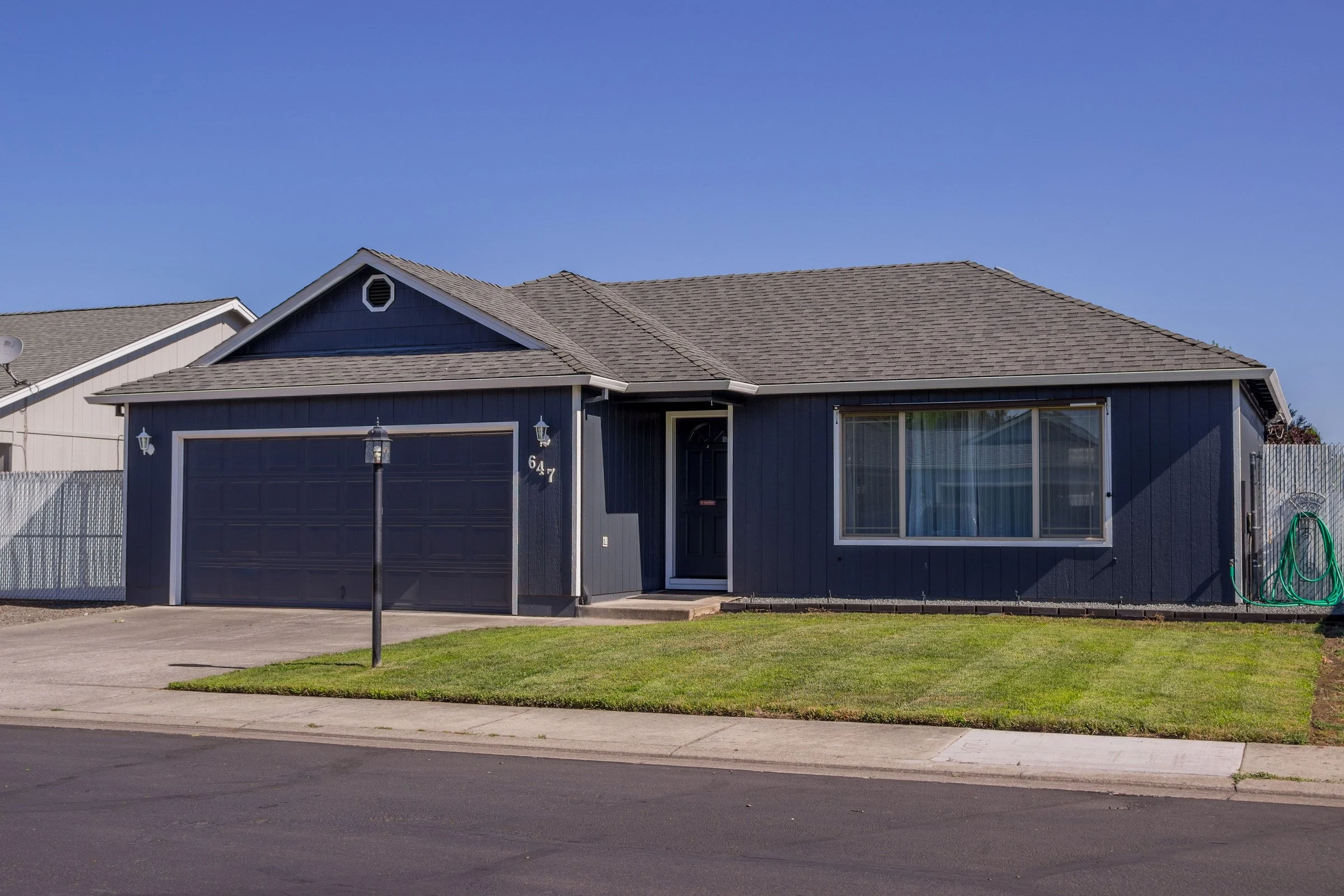
A well-kept single-family home on a clear day. The home is shown for illustration only and is not a Veenstra Team listing. Photo: Clay Elliot via Pexels, Pexels License.
Paying off your house is a real milestone. After years of sending that payment, the loan is gone, and the home is yours without a mortgage hanging over it.
The last payment isn't quite the last task, though. A few practical steps protect that clean title, keep your taxes and insurance on track, and help you avoid a surprise bill or a lien that never got released. Here's what I tell Kalamazoo-area homeowners to handle next. This is general information, not legal, tax, insurance, or financial advice. Confirm the details with your servicer, your treasurer, your insurance agent, and, when you need it, a title company or attorney.
What should you handle first?
Get a payoff quote before you send the last payment. The balance on your monthly statement is not the same as the payoff amount. Interest accrues by the day, and the payoff figure is the amount due as of a specific date, which can also include fees that haven't hit the statement yet. The Consumer Financial Protection Bureau makes that distinction clearly. If your loan is secured by your home, your servicer generally has to provide an accurate payoff statement within seven business days of a written request, except in limited situations such as bankruptcy or foreclosure.
Ask for a quote dated for the day you plan to pay. If you're paying the loan off early, ask whether a prepayment penalty applies. Then pay the quoted amount and keep the statement with your records.
After the payoff posts, cancel autopay. Wait until you can see that the payoff has been applied and the balance is zero. Then cancel any automatic draft through your bank, your servicer, or a third-party bill-pay service. Cancel too early, and the last payment might not go through. Leave it on, and you can end up with a draft after the loan is already gone.
Watch for the escrow refund. If your servicer collected money for taxes and insurance in escrow, any amount left after payoff is yours. Federal mortgage servicing rules generally require the servicer to return that balance within 20 days, not counting Saturdays, Sundays, and legal public holidays. If that window has passed and you haven't received a check or a deposit, follow up with the servicer. Keep a record of the refund; it can help you start setting aside money for the bills you'll now pay yourself.
Keep the paperwork that proves the loan is satisfied. You don't need a new deed. Your existing deed already shows you as the owner; the mortgage was a lien against that title. Keep the payoff statement, the paid-in-full or satisfaction letter from the servicer, and later a copy of the recorded discharge of mortgage with your other house documents.

Reviewing payoff paperwork at the kitchen table is a good time to make a short checklist of what still needs to be done. Photo: Ron Lach via Pexels, Pexels License.
How do taxes, insurance, and the lien release work in Kalamazoo County?
Set up your own property tax payments. Once escrow stops, those bills are yours to pay. In Michigan, property taxes are typically billed twice a year and collected by your local city or township treasurer.
Summer taxes generally become a lien on July 1 and are due by September 14, unless a city charter sets a different date. Winter taxes generally become a lien on December 1 and are due by February 14, or the next business day if that date falls on a weekend or holiday. The City of Kalmazoo is a local exception: summer tax bills are due by July 31, and the city lets you pay that summer bill in six monthly installments if you start on time. Portage, Oshtemo Township, Texas Township, and many other nearby communities follow the more typical mid-September and mid-February pattern. Check the due date on your bill, and if the bills had been going to the mortgage company, ask your treasurer to send them to you. Unpaid real property taxes are typically turned over to the county treasurer on March 1, with additional interest and fees.
Your principal residence exemption does not change just because the mortgage is paid off. Michigan's PRE is tied to owning the home and occupying it as your principal residence, and to having claimed the exemption with your local assessor. It is not tied to having a mortgage. If this is still your home, you do not need to refile just because you paid off the loan. You would only rescind the exemption if the house stops being your principal residence. For more on how the PRE and taxable value work, see my post on how Michigan property taxes reset after a sale.
Call your insurance company, and don't let coverage lapse. Your policy likely lists the lender as a mortgagee or additional interest. Ask your insurer to remove the lender and confirm that your homeowner's coverage stays in force. A paid-off house still needs insurance. This is general information, not insurance advice — your agent can tell you exactly what to change.
About 60 days later, confirm that the lien was released. In Michigan, once a mortgage has been paid or otherwise satisfied, the lender must prepare a discharge, file it with the register of deeds in the county where the property is located, and pay the recording fee, all within 60 days. That's in MCL 565.41 and 565.44. (A 75-day window applied only for two years after a 2004 amendment; the 60-day deadline has been the rule since 2006.)
For a home in Kalamazoo County, start with the Register of Deeds' free online index, Deeds Search. The county's Document Searches page explains how it works. Search by name first — addresses are not required on recorded documents, so an address search can miss records. You can also search in person at 201 W. Kalamazoo Avenue in downtown Kalamazoo, at (269) 383-8970. The index is free; copies have a per-page fee.
Look for a Discharge of Mortgage, or sometimes a satisfaction or release. If 60 days have passed and you don't see it, call your servicer first. If you still need help, a title company or real estate attorney can take the next step. Michigan law also provides a path to damages if a lender refuses or neglects to discharge the mortgage after being asked; that's a conversation for an attorney.
If your home is in Allegan, Barry, Van Buren, or another nearby county, use that county's register of deeds the same way.
What should you do with the payment you no longer send to the bank?
A lot of people find it helpful to keep setting aside what used to go to the mortgage, at least for a while. You'll now pay property taxes and insurance in larger lumps instead of through escrow, and a repair fund for the roof, air conditioning, and water heater can take some of the sting out of a big failure. How you divide that money is a personal decision, and a financial planner or tax professional can help you build a plan that fits. This isn't financial advice, and there's no single right split.
A paid-off house also changes your options, if and when you want them. Some owners are glad to stay and enjoy the flexibility. Others start thinking about rightsizing or downsizing, or about using the equity in a home they own free and clear to buy the next place. If that's on your mind, I've written about when it might be time to downsize or right-size and buying your next home before you sell. When you're ready to run numbers on a sale, my guide to seller closing costs in Kalamazoo shows what typically comes out of the price.
You don't have to have a move planned to talk it through. A lot of people wait to call until they've already decided to sell. You don't have to. We can look at what the house could mean for your next chapter while you're still thinking. Call or text (269) 350-5514, email sold@veenstrateam.com, or book a 15-minute call.
Your 3-step plan
Start with a quick call. If you want a second set of eyes on the payoff checklist, or you're starting to wonder what a paid-off house could do for you next, I'm glad to talk it through. Call or text (269) 350-5514, email sold@veenstrateam.com, or book a 15-minute call.
Close the loop on the loan. Request the payoff quote, confirm the payment posted, cancel autopay, watch for the escrow refund, set up tax payments with your treasurer, update your insurance, and, after 60 days, look up the recorded discharge.
Decide what this home should do for you next. Stay, rightsize, or use the equity to move — there's no required next step. If you want local numbers or a sense of your options, I can help you look at them without pressure.
Just paid off your Kalamazoo-area house, or getting close? I'd be glad to help you think through what comes next.
Frequently Asked Questions
Is the balance on my mortgage statement the amount I need to pay off the loan?
No. Your payoff amount is the total required to satisfy the loan as of a specific date. It includes interest through that day and may include fees that aren't on the statement. Request a payoff quote from your servicer before you send the last payment.
How long does a Michigan lender have to record a mortgage discharge?
Within 60 days after the mortgage has been paid or otherwise satisfied, the lender must prepare the discharge, file it with the register of deeds in the county where the property is located, and pay the recording fee. That's required by MCL 565.41 and 565.44.
How do I check whether my mortgage was discharged in Kalamazoo County?
Use the Kalamazoo County Register of Deeds' Deeds Search, or visit the office at 201 W. Kalamazoo Avenue. Search by name first. Look for a discharge of mortgage (sometimes called a satisfaction or release). The index is free to search; copies have a per-page fee.
Does paying off my mortgage affect Michigan's principal residence exemption?
No. The PRE depends on owning and occupying the home as your principal residence and having claimed the exemption. It is not tied to having a mortgage. You don't need to refile just because the loan is paid off.
When are property taxes due once my escrow account is closed?
You pay them directly to your city or township treasurer, usually on a summer bill and a winter bill. In much of Michigan, summer taxes are due by September 14 and winter taxes by February 14, unless a city charter sets a different date. In the City of Kalamazoo, summer taxes are due July 31. Check the due date on your bill.
About Jason Veenstra
Jason Veenstra is a REALTOR® with the Veenstra Team, brokered by eXp Realty, serving buyers and sellers across Greater Kalamazoo and Southwest Michigan. Licensed since 2009, Jason brings extensive local market experience and a family real estate tradition dating to the 1980s. He helps clients navigate existing-home purchases and sales, relocation, and new construction.
Reach Jason and the Veenstra Team: call or text (269) 350-5514, email sold@veenstrateam.com, or book a 15-minute call.